
Capture the original.
Keep the message, voice note, photo or document. Link it to the estate activity it describes. A transcription or summary should help a reviewer find the source, rather than replace it.
RESOURCES / FIELD-TO-EVIDENCE GUIDE
The field-to-evidence workflow starts with a simple principle: record what is known, retain where it came from, and keep the remaining questions visible.
A correction updates the record without erasing the original.
Blok X, nombor kerja Y, dua puluh tiga tandan.
23 bunchesOriginal voice note
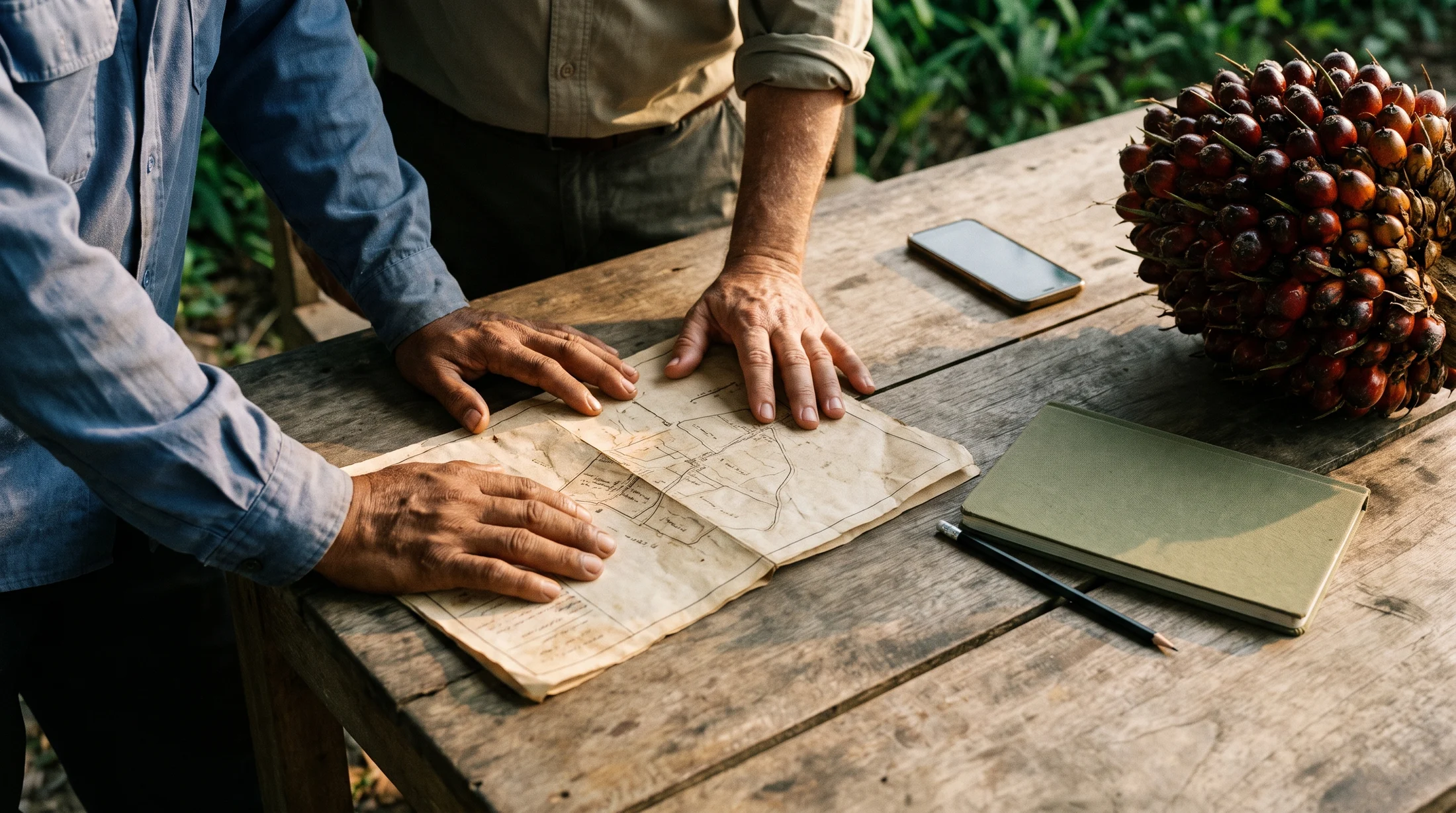
Keep the message, voice note, photo or document. Link it to the estate activity it describes. A transcription or summary should help a reviewer find the source, rather than replace it.
“Finished Block C. Used two bags.” gives a block and quantity. It does not establish the input, bag weight, worker identity or activity date. Confirm those details against the source and estate context.
Carry unresolved questions and supporting evidence into the next review. An update saying an issue is fixed should be checked against its evidence before the record is treated as complete.
Organised records support MSPO preparation. They do not replace the applicable certification assessment. The RIMAU workflow is designed to help teams capture, connect, review and prepare throughout the year.